
The press has to fit the dies,
the floor, and the demand.
When the next press has to be right the first time, we do the homework upfront. Dies, tonnage, bed size, floor layout, and production ramp. You're not solving fit and tooling situations after the machine arrives.
Let's Talk FitShops where the press has to earn its floor space.
We work with stamping houses, fabrication shops, and press-based forming operations across HVAC, architectural metal, and general industrial markets. If the next press has to match existing dies, fit the floor, and keep pace with production demand, this is where we start.
What metalforming operations
are working through.
These are the conversations that happen before the first press quote. They're about what the current equipment can't handle, and what the next investment needs to get right from day one.
The risks worth thinking through
before the press arrives.
A capital investment in press-based equipment is a long commitment to dies, a floor layout, and a production plan. Getting the fit right upfront is what keeps these from becoming production realities after installation.
We look at the dies
before we talk press.
We start with the dies. Tonnage requirements, bed size, stroke, feed system, and the production volumes the line has to hit all get reviewed before any press goes on the table. That means the recommendation you get is matched to what the operation actually needs, not the nearest available tonnage spec.
We look at the floor, the workflow, and the safety considerations before installation, and we stay involved through startup and production ramp, because that's when press fit actually gets proven.
"A major capital investment deserves clarity, not a quote and a handoff." Bill Koster
-
01Die & Application ReviewExisting tooling, tonnage requirements, bed size, stroke, and production volumes. All reviewed before any press recommendation is made.
-
02Tonnage & Bed-Size MatchingRight-sized to the dies and the work. Overbought tonnage ties up capital, and undersized presses create tooling situations that follow the operation for years.
-
03Floor & Workflow AssessmentA press has to fit the floor, the line, and the workflow it joins. We look at the full production picture before the equipment goes in.
-
04Manufacturer Relationships That Hold UpWe represent manufacturers we can stand behind, with service support that stays engaged after the press is running and production questions come up.
-
05Installation, Integration & Production RampWe stay involved through installation and early production, because the transition from install to first parts is where press fit either holds or doesn't.
What we work with in metalforming.
A working summary of the press and forming equipment we represent and support, matched to the application, the dies, and the production demand.
- Mechanical Presses
- Hydraulic Presses
- Servo Presses
- Stamping & Punch Presses
- Press Brakes & Brake Presses
- Roll Forming Equipment
- Tube & Pipe Benders
- Shears & Ironworkers
- Laser Cutting Systems
- Plasma Cutting Systems
- Decoilers & Straighteners
- Feeders & Coil Handling Systems
- Transfer Systems
- Robotic Part Handling
- Press Automation
- C-Frame & Link Presses
- Direct Drive Servo Presses
- Heavy-Duty Servo Presses
Don't see what you need? We work across manufacturers and applications. Let's Talk →
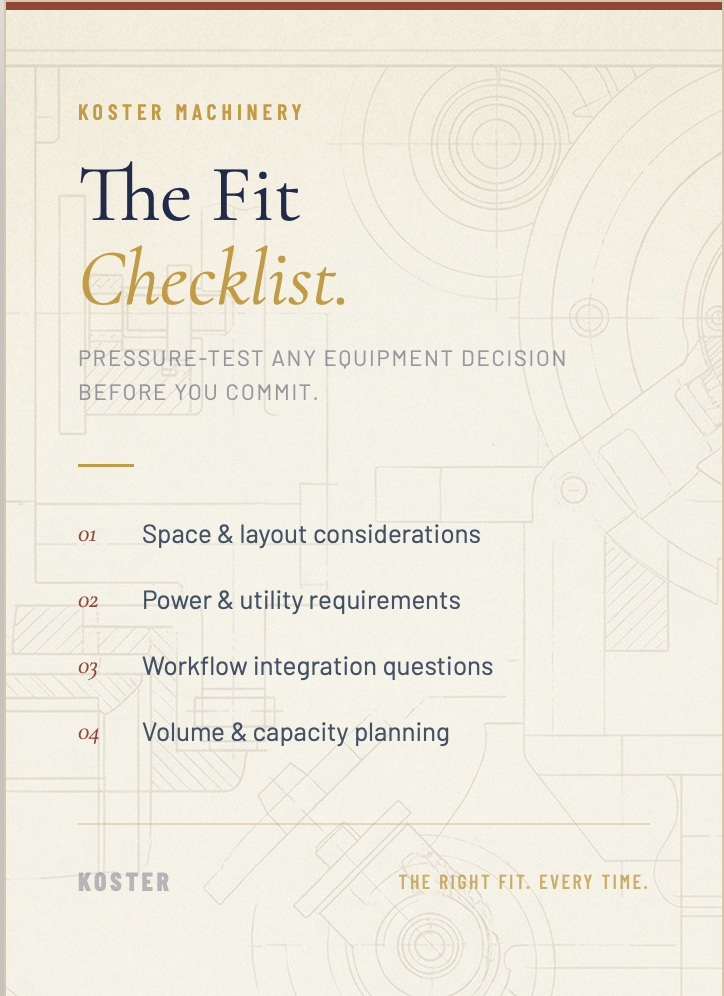
Download the
Fit Checklist.
Before you commit, make sure you've covered the questions that matter. This checklist walks you through exactly what we review before recommending anything.
- Space & layout considerations
- Power & utility requirements
- Workflow integration questions
- Volume & capacity planning
No spam. Just the checklist.
Brands chosen for a reason.
Not a catalog. Each manufacturer was selected because their equipment holds up in real production environments, and because Bill knows their lines cold. Click any logo to hear his take. Partners marked Exclusive are sold directly through us.
Brands chosen for a reason.
Not a catalog. Each manufacturer was selected because their equipment holds up in real production environments, and because Bill knows their lines cold. Click any logo to hear his take. Partners marked Exclusive are sold directly through us.

A real decision, not a hypothetical.
This is the kind of situation we work through regularly. The process and the outcome are what we show up to deliver every time.
A stamping house running production for an HVAC component customer was pushing an aging mechanical press past its reliable capacity. The press was holding, but just barely, and the customer's volumes were growing. The bigger concern was that any replacement had to match a set of existing dies that represented years of tooling investment. Getting that wrong wasn't an option.
We started with the dies. Bed size requirements, shut height, stroke, and tonnage all got reviewed before any press was on the table. We walked the floor, looked at the coil handling setup, and reviewed how the existing workflow would need to change. Once the criteria were clear, we matched them to a Stamtec press that fit the dies, the floor, and the production demand without requiring tooling modifications. We stayed involved through delivery, installation, and the first production run.
The press ran the existing dies from day one. Production volumes increased to meet the customer's demand, uptime improved, and the shop avoided the tooling retrofit costs that typically follow a press selection made without die review.
Other manufacturing sectors we serve.
Start with a conversation.
Not a quote.
Tell us about the dies you're running, the press you're replacing, and where production demand is heading. We'll ask the right questions and figure out what actually fits. No pressure, no pitch, no agenda other than fit.
Talk to someone now. No queue, no gatekeeping.